The prototype passed its bench test. Then several boards from the first production batch reset when a motor started. Procurement asks whether a component changed. The assembly team asks which firmware version was approved. The engineer who tested the prototype remembers using a bench supply and never connecting the motor.
In that situation, the most useful first step is to run the approved prototype and an affected production board under the same conditions. Did something change between the two builds? Or did the original test leave a problem undiscovered? The answer determines whether the team should investigate the design, the build or the test setup first.
Four questions can help an OEM and its PCB assembly supplier narrow down what happened before committing the next batch.
1. Did the released files match the approved prototype?
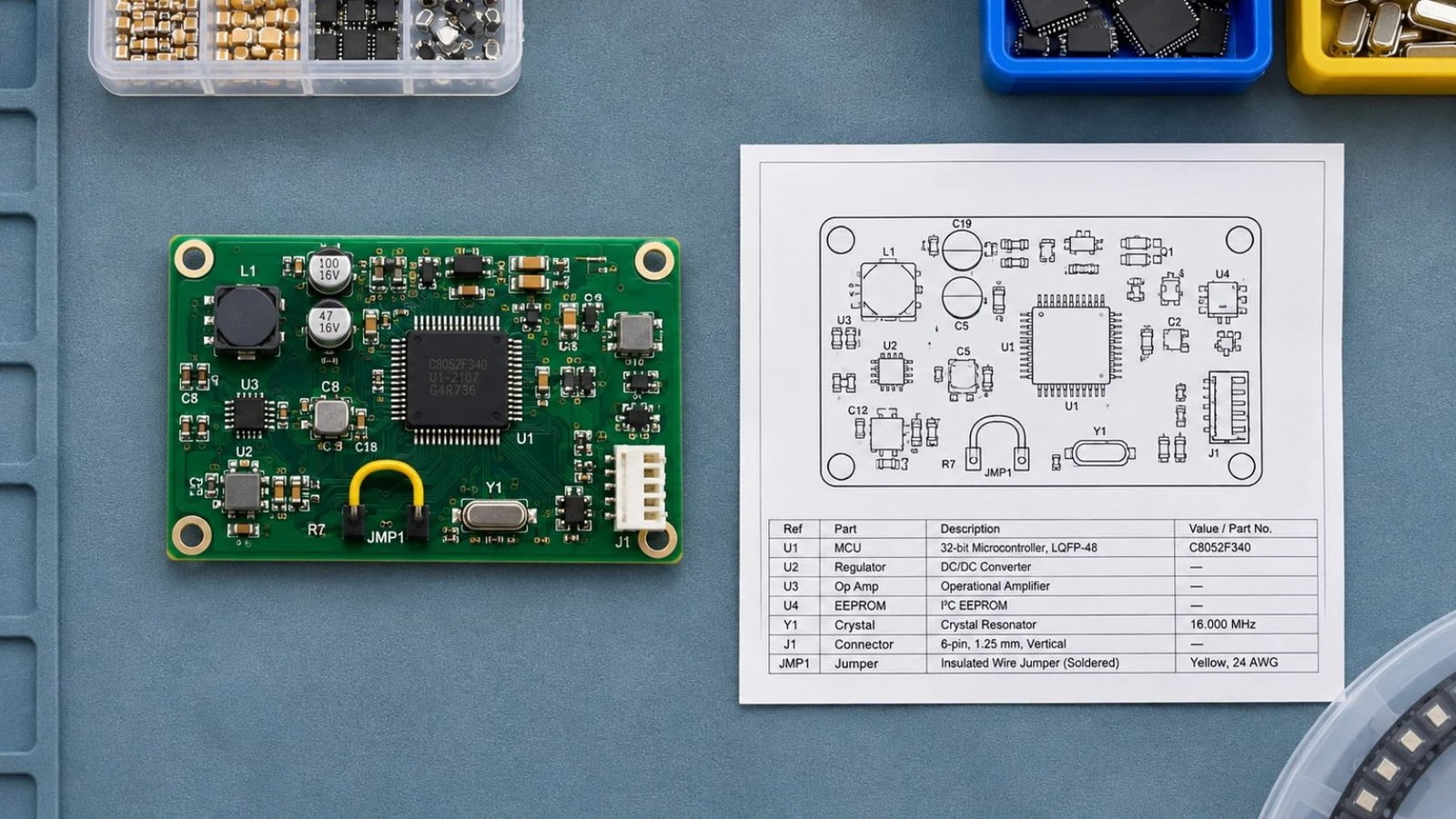
Consider a resistor marked R17. During prototype testing, an engineer changes its value, reloads the firmware and gets the expected result. The board is signed off, but the bill of materials sent for production still lists the original resistor. The supplier can assemble the entire order according to the released BOM and still produce boards that behave differently from the approved sample.
If the first batch behaves unexpectedly, compare three things: what is fitted to the approved sample, what the released BOM specifies and what was fitted to an affected production board. That comparison separates a documentation discrepancy from an assembly discrepancy. Check the firmware revision the same way, especially if the prototype was reprogrammed after delivery.
Before the next order, record each approved modification against its component reference, update the affected files and identify the revision the supplier is authorized to build. Keeping the signed-off sample is valuable. Pairing it with the correct release files makes it reproducible.
2. Did a critical assembly step depend on someone’s hands?
A connector can pass an electrical test and still sit too far forward to mate with the enclosure. On the prototype, an engineer may have held the connector against the enclosure opening while soldering it. The assembly drawing shows which way the connector faces, but it says nothing about how far it should project beyond the board edge.
That omission becomes expensive when boards reach final assembly. Some units fit, others need rework, and the supplier may already have assembled the rest of the batch.
For a fit problem, give the production team a feature it can measure: the connector’s position relative to a defined board edge or mounting hole, the permitted tolerance and the method for checking it. An approved enclosure can help verify first-piece fit. If positioning depends on how the part is held, review whether a fixture is needed during the PCB assembly DFM review. The practical question is simple: could another operator reproduce the fit using the drawing and work instructions alone?
3. Did the test cover what happens in the finished product?
In the motor example, a power-on check confirms that the controller starts under the bench conditions used. The customer needs to know something more specific: will it stay running when the motor starts under the intended load?
Use the same supply, wiring, load, firmware and test sequence for the approved prototype and the affected board. Record what happens at motor startup. The results give the team a starting point for investigation. For a relay output, the 24 V industrial control board testing checklist shows how to specify the load and define a passing result.
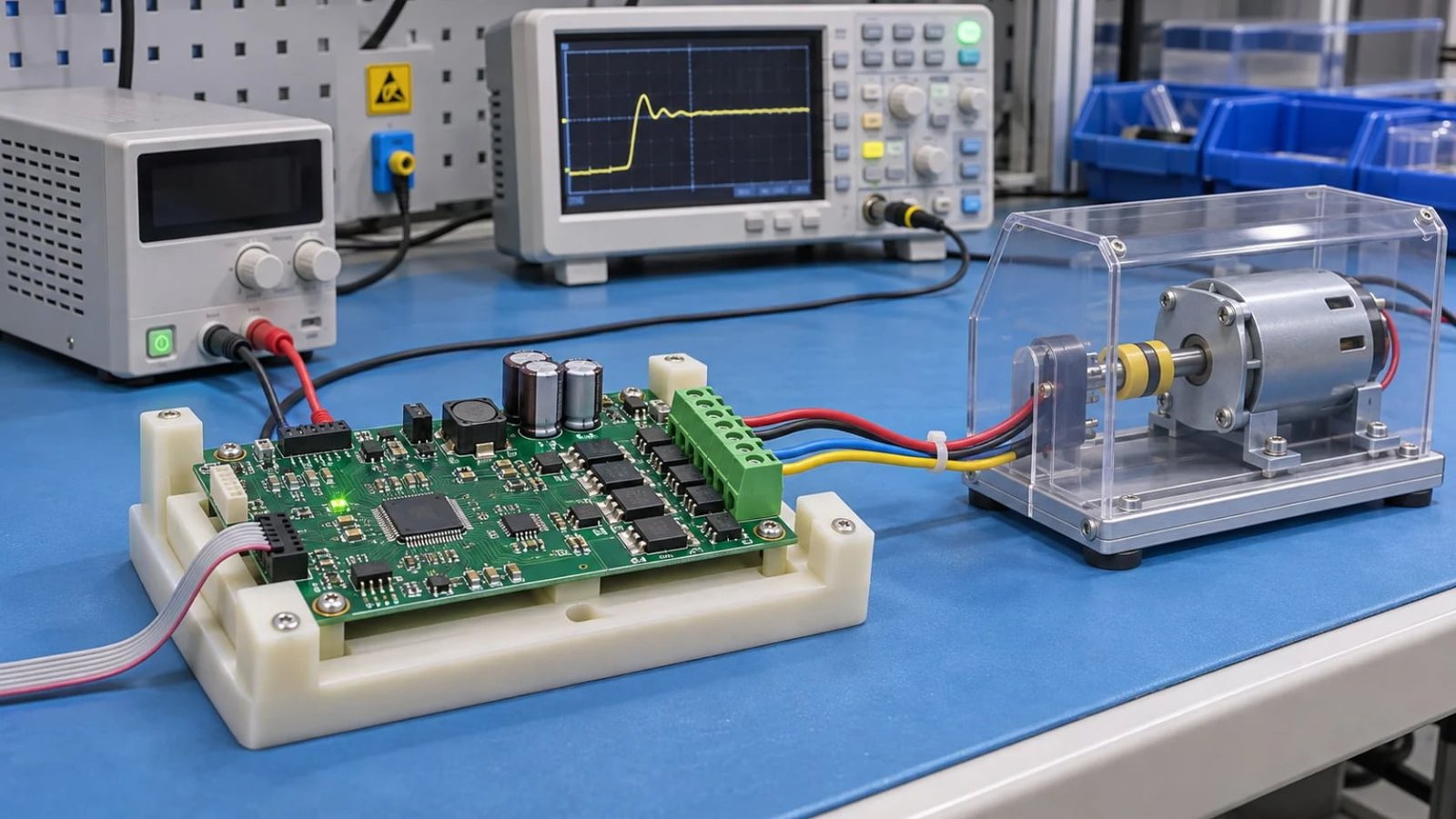
Illustration of a motor-control test setup.
| What happens under the same test? | What to investigate next |
|---|---|
| Both the prototype and the production board reset. | Check the supply and test setup, then review the design against the intended operating condition. The original bench test may have missed a condition that affects both boards. |
| The prototype passes and the production board resets. | Compare fitted components, firmware, assembly condition and rework history. If available, include a passing board from the same batch to narrow the differences. |
| Both pass on the bench, but the fault returns in the finished unit. | Reproduce the customer’s wiring, power source, load and startup sequence. An integration difference may explain why the bench test passes. |
Agree with the manufacturer on exactly what counts as a pass. For example: the controller must complete the agreed startup sequence without resetting under the specified load. That gives the test operator something observable and gives the buyer a meaningful record to review. For background on defining test requirements, see Altium’s guide to PCBA design and testing (PDF).
4. Were pilot-build corrections carried into the next production order?
Suppose the production team repositions a connector on several pilot units and those units pass the fit check. Two questions remain: which units were corrected, and what will keep the next operator from repeating the original placement?
Before releasing the next order, record the affected units, the correction, the retest result and the revised assembly instruction. Identify who can approve the change. If the correction also changes the BOM, drawing or fixture, make sure the next purchase order points to the updated revision.
This matters for delivery as well as quality. An enclosure-fit issue may allow procurement of unaffected components to continue while final assembly waits for approval. Naming the affected operation helps the buyer and supplier agree on what can proceed without putting the rest of the order at risk.
What to confirm before releasing the next build
| Release check | Evidence to review |
|---|---|
| Approved configuration | The BOM, board files, assembly drawings and firmware correspond to the signed-off sample. Any hand modifications are documented. |
| Repeatable assembly | Critical positioning and manual operations have instructions, acceptance criteria and a way to verify the result. |
| Relevant testing | The team has agreed on operating conditions, pass/fail limits and which results to retain. |
| Pilot findings | Each open issue has an owner. The next build identifies the approved revision, completed corrections and any operations still on hold. |
Preparing for a pilot run or investigating a first-batch issue? Share the approved board revision, build quantity and test conditions. If a board failed, tell us what you expected, what you observed and whether the approved prototype behaved the same way under the same test. These details give VOSNOR’s engineering team a practical starting point for reviewing your project.