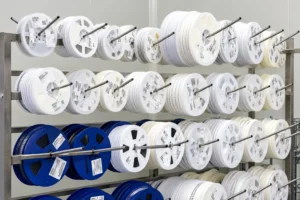
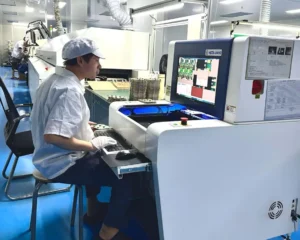
When comparing turnkey PCB assembly vs box build, start with what you expect to receive. Suppose you need 500 industrial controllers. One supplier quotes populated boards, programmed and tested on a fixture. Another quotes controllers installed in enclosures, wired, labeled and tested through their external connectors. Both offers say turnkey. Which one covers the product your receiving team expects to unpack?
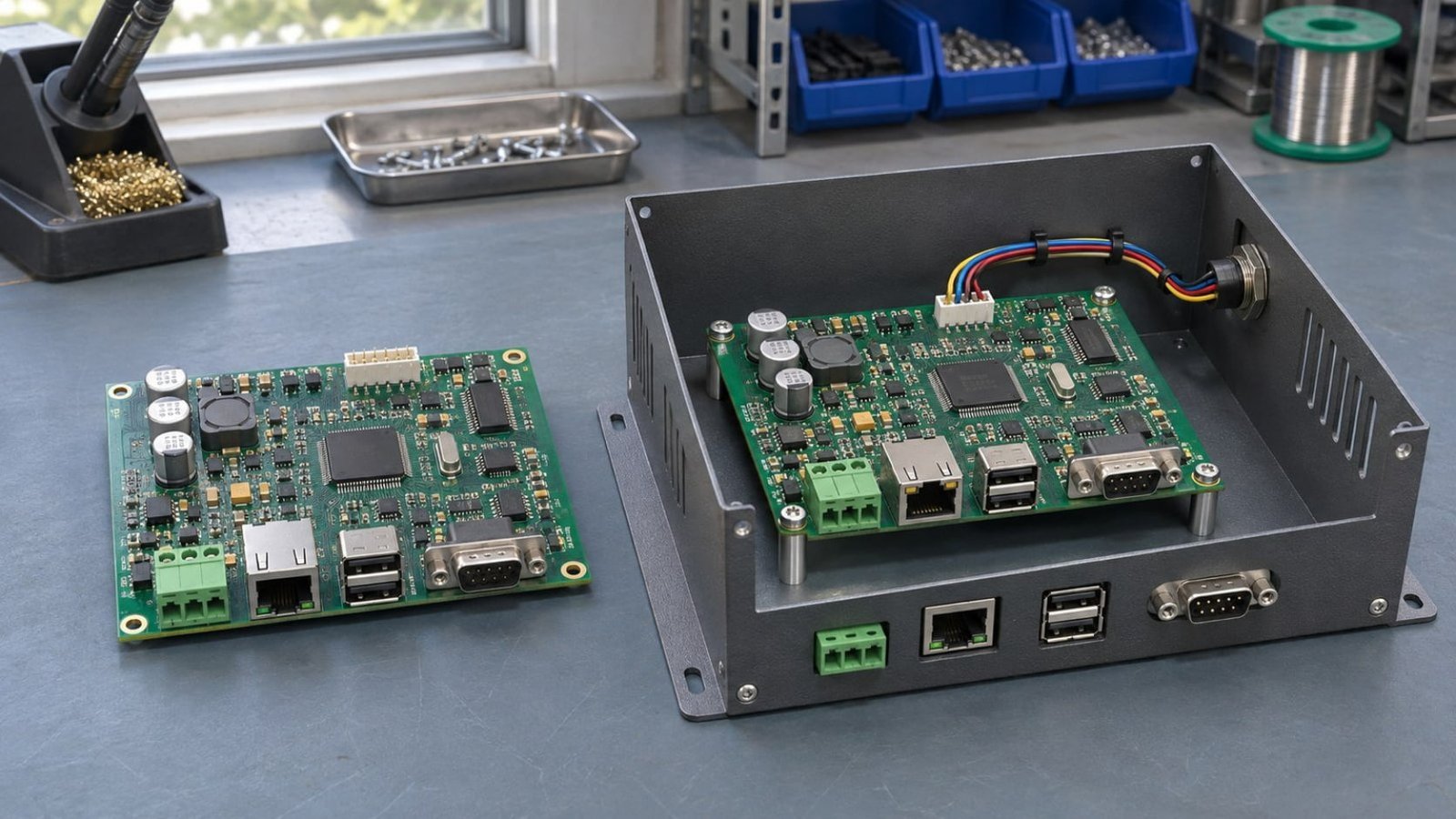
Turnkey tells you who sources the boards and components. Box build tells you how much of the finished product the supplier will assemble and test. A supplier can provide both. A finished, individually packaged unit is included only when the quotation specifies it.
A useful first line for any request for quotation (RFQ) is: “At delivery, each unit must include…” Finish that sentence before comparing unit prices.
What does turnkey PCB assembly include?
In a full turnkey PCB assembly project, the supplier coordinates bare PCB procurement, sources components against the approved bill of materials (BOM) and assembles the boards. At VOSNOR, bare boards are purchased through partner suppliers. SMT and through-hole assembly follow the approved production files. If you supply selected parts yourself, identify those part numbers and quantities so the supplier can quote a partial turnkey scope.
Programming and functional testing need their own definitions. If a quotation says “tested PCBA,” ask which function is tested, with what equipment and against which pass/fail limit. A controller that powers up on a fixture and a controller that operates correctly with the intended load have passed different checks.
For board-level sourcing, assembly and project review, see VOSNOR’s Turnkey PCB Assembly Services.
Where does box build start and stop?
Box build starts when the supplier takes responsibility for an integration step beyond the assembled board. A simple scope might involve mounting a PCBA in a customer-supplied housing, connecting one approved harness and returning the assembled unit in bulk packaging. A broader scope might include sourcing the enclosure, loading firmware, testing through the external ports, applying serial labels and packing each unit for distribution.
The distinction matters when a drawing changes. If the customer supplies the housing and a connector no longer aligns with the opening, who reviews the fit, who approves a change, and which operation goes on hold? Those are practical questions to settle before ordering the full quantity.
Use the Box Build Assembly and PCBA Integration page when your requested deliverable includes enclosures, wiring or final assembly.
Turnkey PCB assembly vs box build: who supplies and tests each item?
Use this table when reviewing a supplier’s quotation. Ask the supplier to mark each line included, customer-supplied or quoted separately.
| Scope item | Turnkey PCB assembly | Box build and final assembly |
|---|---|---|
| Bare PCB and electronic components | Supplier sources agreed items against approved files. Buyer identifies consigned parts and approves substitutions. | The PCBA may come from the same supplier or the buyer. Identify who owns board supply and incoming acceptance. |
| Enclosure, harnesses and hardware | Usually outside a board-only quote unless listed. | Specify who buys each item, which drawing revision applies and who approves first-piece fit. |
| Firmware and programming | Agree on firmware version, who provides it, how it is loaded and what record is required. | Identify any configuration or programming required after installation, including how the finished unit is identified. |
| Functional testing | Define board-level test points, fixtures, operating conditions and limits. | Define the functions to verify through the assembled unit’s actual connectors, controls or load. |
| Labels and packaging | Specify board identification, protective packing and quantity per pack. | Specify unit labels, serial numbers, accessories, cartons and whether delivery is bulk-packed or individually packaged. |
| Release and exceptions | Name who approves material changes and releases the board revision. | Name who can release the first unit and decide what happens if an enclosure, harness or final test fails. |
Three details that can change the quote after you approve it
1. Who supplies the test fixture?
Two suppliers can quote the same functional test with different cost assumptions. One may expect you to ship an existing fixture and test program. Another may include fixture development as a one-time charge. Ask both suppliers to separate fixture development, per-unit testing and any maintenance responsibility. If you own the fixture, agree where it will be kept and what happens when the design changes.
A useful acceptance statement names an observable result. For example: “With the approved firmware installed, the controller must complete the agreed motor-start sequence under the specified load without resetting.” That gives purchasing a defined test to compare and gives engineering a result it can verify. See VOSNOR’s testing and inspection scope.
2. Does the harness arrive finished, or must the supplier make it?
“Install harness” can mean connecting a finished, customer-supplied cable. It can also involve cutting wire, crimping terminals, assembling connectors and inspecting the completed harness. These require different materials, labor and acceptance checks.
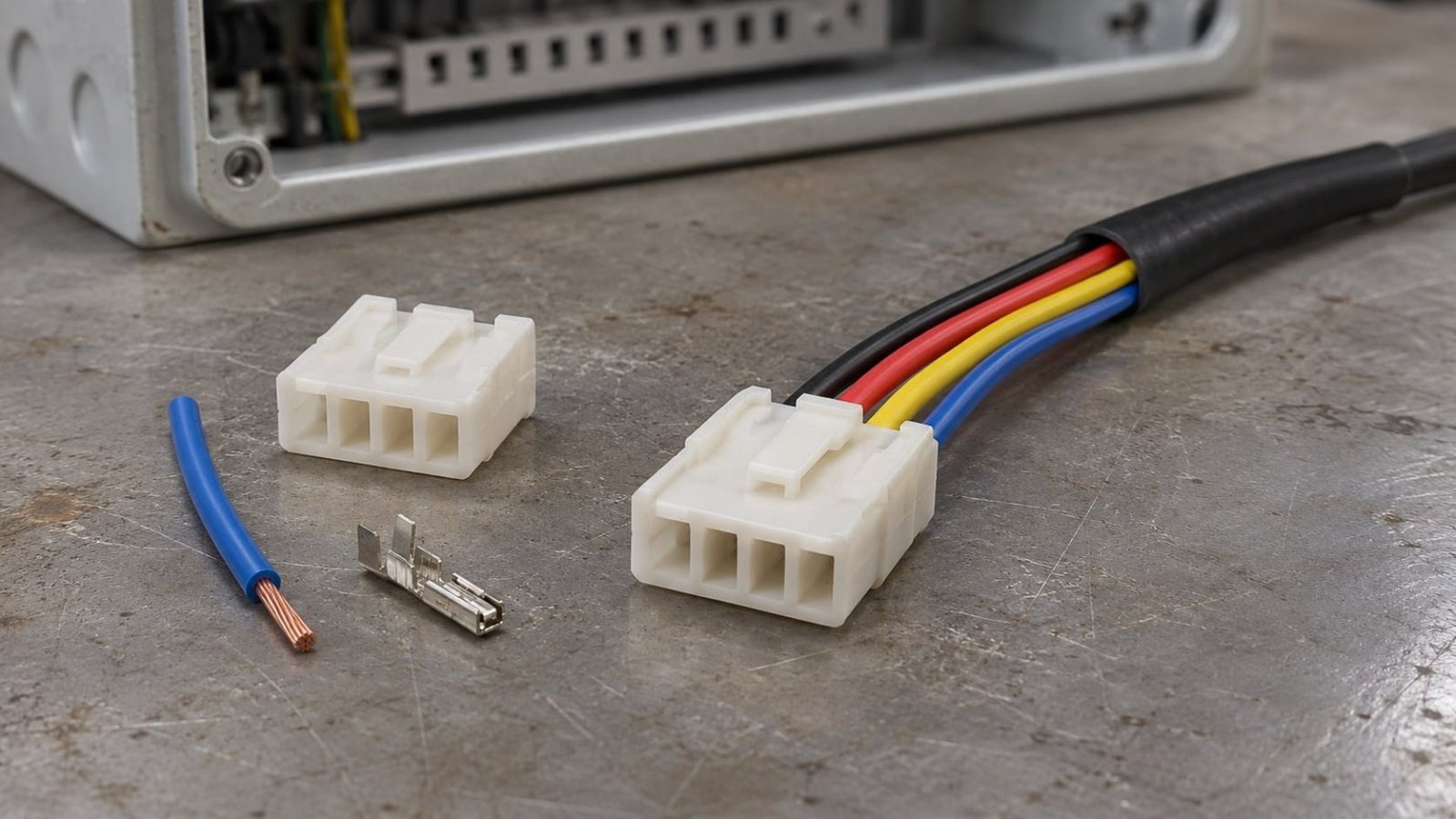
If harness fabrication is included, provide the pinout, wire specification, connector and terminal part numbers, length tolerances and inspection requirements. Where your project specifies IPC/WHMA-A-620, identify the applicable revision and class in the RFQ. See WHMA’s overview of IPC/WHMA-A-620 for OEMs and electronics manufacturers.
3. What exactly does “packed for shipment” mean?
For a buyer receiving tested boards on an assembly line, protective bulk packaging may be sufficient. A distributor receiving finished products may need one unit per carton, a matching serial label, an accessory pack and an instruction insert. If your warehouse scans each unit on arrival, specify where the barcode goes and what it must encode.
These details affect both the unit price and the release schedule. A finished batch can still wait for delivery if nobody has approved the label artwork. When comparing suppliers, put recurring packaging costs and one-time setup charges on separate lines. How to compare PCB assembly costs
An RFQ example you can adapt
To compare turnkey PCB assembly vs box build on the same 500-controller order, ask each supplier to quote the same delivery scope:
Please quote 500 controllers delivered as assembled units. We will supply the approved enclosure, finished harness and released firmware. Please quote bare PCB and component procurement, PCB assembly, programming, installation into the enclosure, harness connection and final functional testing. Quote the test fixture separately. Each unit requires a serial label and protective bulk packaging. Please identify customer-supplied items, one-time charges, exclusions and the items that require our approval before production.
If you also want a board-only option, ask for it as a separate line: “Please provide an alternative price for 500 programmed and tested PCBAs delivered in protective packaging, with enclosure assembly and final unit testing excluded.” Now the price difference has a clear meaning: it shows what it costs to move the handoff from a tested board to an assembled controller.
What should you send for a project review?
For a board-level quote, start with the BOM, available PCB and assembly files, build quantity, firmware requirements and expected tests. For a box build quote, add the enclosure or assembly drawing, mechanical parts list, harness information, labeling instructions and final acceptance criteria. Flag any missing information and name the person who can approve it.
If you are deciding where to hand off production, send VOSNOR the expected quantity and one sentence describing what your receiving team should be able to unpack, inspect and accept. That gives our team a concrete starting point for reviewing the build with you.