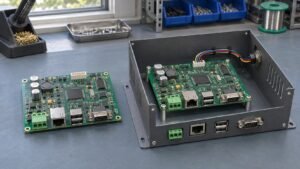
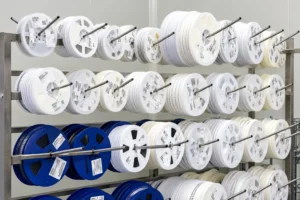
Choosing a PCBA manufacturer in China is a production decision, not just a search for the lowest assembly price. The right supplier should be able to show how your files, components, inspection plan, test requirements and delivery scope will be handled before a purchase order is placed.
Use the checks below to compare suppliers on the same project. They are designed for electronics buyers, hardware engineers and supply-chain teams evaluating a new or backup manufacturing partner.
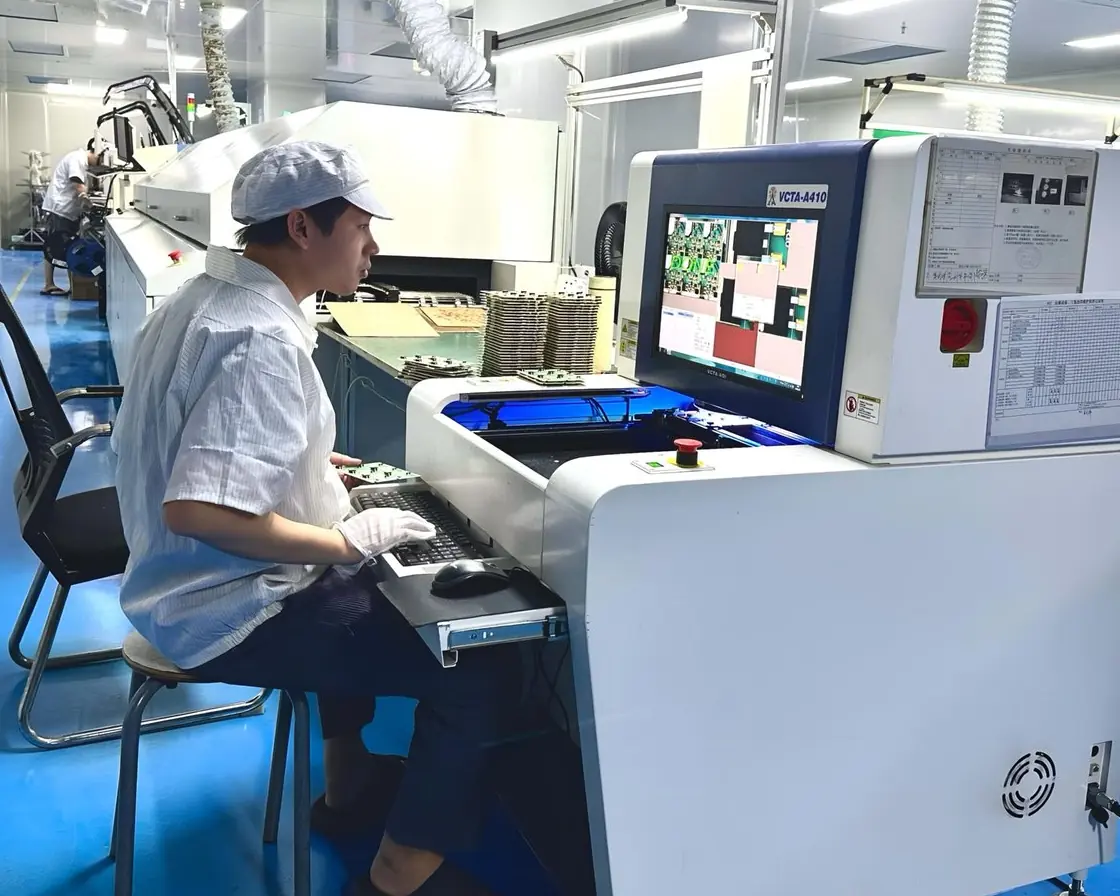
PCB assembly operators using an AOI inspection workstation at VOSNOR.
Confirm what “PCBA manufacturing” includes
Ask the supplier to define its scope in writing. Does the quote cover SMT and through-hole assembly, component sourcing, programming, inspection, functional testing, final product assembly, packaging or shipment coordination? Ask which steps are performed in-house and which are handled by approved partners.
Also clarify whether the supplier fabricates bare PCBs or procures them through partners. These are different capabilities. For turnkey builds, confirm who owns board procurement, incoming inspection and resolution of fabrication issues.
Check experience with your board and product requirements
Share a representative BOM, board files and assembly drawings under an agreed confidentiality process. Ask the supplier to identify the project details it needs to review: package types, fine-pitch parts, connectors, board dimensions, coating or mechanical constraints, programming, test access and expected build quantities.
Relevant experience means the supplier can explain the process and risks that apply to your product. For example, if your design uses addressable LEDs, ask how the supplier will test every pixel on a WS2812B LED board.
Evaluate the engineering review before production
Ask how the supplier reviews design and manufacturing files before ordering materials or starting a build. A useful review should flag questions such as footprint or polarity mismatches, missing assembly details, unclear revisions, component availability, test access and mechanical fit.
Ask how findings are documented and who must approve a change. A manufacturing review can identify potential issues, but it does not replace design validation, regulatory assessment or product testing. See our PCB assembly DFM review guide for a practical checklist.
Make component sourcing and substitutions traceable
For a turnkey quote, ask where components will be sourced, how proposed alternatives are evaluated, and what evidence is available for part identity and lot records. Agree that no substitute is used without your written approval. If you supply parts, define labeling, quantities, packaging, moisture handling, shortages and responsibility for excess inventory.
Ask how the supplier will communicate obsolete or unavailable parts and what information it needs to assess an alternative. Compare sourcing assumptions in the quote rather than treating “BOM included” as a complete description.
Compare complete quotes on the same scope
Send each supplier the same revision-controlled files, BOM, quantities, delivery destination, test requirements and packaging instructions. Ask the quote to separate or clearly identify board procurement, components, assembly, programming, inspection, testing, tooling, packaging, freight assumptions and any exclusions.
Check lead-time assumptions, quote validity, minimum order conditions, material substitutions, excess inventory and how changes affect price or schedule. A lower total may reflect a different component source, omitted testing or a narrower delivery scope. Our PCB assembly cost guide explains the main quote variables.
Ask for a quality plan tied to your product
Request a clear description of the controls that will apply to your build: incoming material checks, process inspection, workmanship criteria, rework handling, nonconformance reporting and records retained. Ask which inspection methods are available for your board and which are actually included in the quotation.
Certifications can be useful evidence of a management system, but they do not certify your particular finished product. Review the certificate holder, scope and validity, then separately agree product-specific acceptance criteria and records.
Define test coverage and acceptance criteria
“Tested” is too vague for a purchase order. List the checks required: for example, visual inspection, electrical checks, programming verification or functional testing. Define who provides firmware, fixtures, procedures and limits; what constitutes pass or fail; how results are recorded; and how failures are isolated and reported.
When a fixture or test process must be developed, agree the engineering work and schedule before production. A supplier should not claim test coverage that has not been defined for your board. See the PCBA FAQ for questions to settle before a project review.
Verify the path from prototype to repeat production
Ask how the supplier will control revisions and communicate changes between prototype, pilot and repeat builds. Confirm how first-build findings, approved substitutions, process settings, test instructions and packaging requirements will be recorded for the next order. Ask the supplier how it would investigate a production failure after the approved prototype passed testing.
Discuss capacity against your actual quantities and required dates. Ask what information the supplier uses to confirm a schedule and how delays or material risks are escalated. Avoid relying on a headline capacity figure that is not tied to your product mix and production plan.
Check communication, document control and confidentiality
Before sharing sensitive files, agree how they will be transferred and who can access them. If you require an NDA, raise it before sending design data. Establish one project contact, the expected response channel, revision naming rules and a written approval trail for engineering and sourcing decisions.
A supplier’s response to a technical question is part of the evaluation. Look for specific questions, clear assumptions and documented next steps rather than an unconditional promise before the files have been reviewed.
Use a simple evidence-based scorecard
Score each supplier from 0 to 2 for every item: 0 = no evidence, 1 = partial or unclear evidence, 2 = documented and project-specific evidence.
-
Manufacturing scope and partner responsibilities are clear.
-
Engineering review process and change approvals are explained.
-
Component sourcing and substitution controls are documented.
-
Quotes use the same BOM revision, quantities and delivery scope.
-
Inspection, test coverage and acceptance criteria are defined.
-
Records, traceability and nonconformance handling are described.
-
Prototype-to-repeat-build controls and schedule assumptions are clear.
-
Communication, confidentiality and file revision practices are agreed.
Use the score to identify unanswered questions, not as a substitute for technical review or a commercial agreement. A supplier with a lower price but unresolved scope, sourcing or test assumptions may create costs later.
What to send for a supplier review
Prepare the latest BOM with manufacturer part numbers and approved alternatives, Gerber or fabrication files, assembly drawings, pick-and-place data where available, build quantities, target dates, programming and test requirements, packaging needs and any required quality records. Mark file revisions clearly. If some items are not ready, identify the gaps and ask what can be reviewed first.
VOSNOR provides PCBA assembly for customer-designed boards, with project scope potentially including component sourcing, programming, agreed inspection and testing, and product integration. Bare PCB fabrication is not performed in-house; for turnkey projects, board procurement can be reviewed through manufacturing partners. Final scope, availability and timing are confirmed against each project. Review VOSNOR’s PCBA capabilities or send your project requirements for an initial review.